

Enemy at the Gates is a 2001 war drama film directed by Jean-Jacques Annaud. Set during the Battle of Stalingrad in World War II, the film tells a story of survival, propaganda, and psychological warfare through the rivalry between two elite snipers on opposing sides of the conflict.
Starring Jude Law, Ed Harris, Joseph Fiennes, Rachel Weisz, and Bob Hoskins, the film follows Soviet sniper Vasily Zaitsev as he becomes a symbol of resistance against the German invasion. His growing reputation attracts the attention of German military leaders, who send their most skilled marksman to eliminate him.
The film combines large-scale battlefield scenes with an intensely personal duel between two soldiers. While the Battle of Stalingrad provides the historical backdrop, the central conflict focuses on the psychological struggle between Vasily and his German counterpart, Major Erwin König.
Released in March 2001, Enemy at the Gates received attention for its dramatic portrayal of one of the most devastating battles of World War II. It remains a notable war film for its combination of historical events, sniper warfare, and human drama.
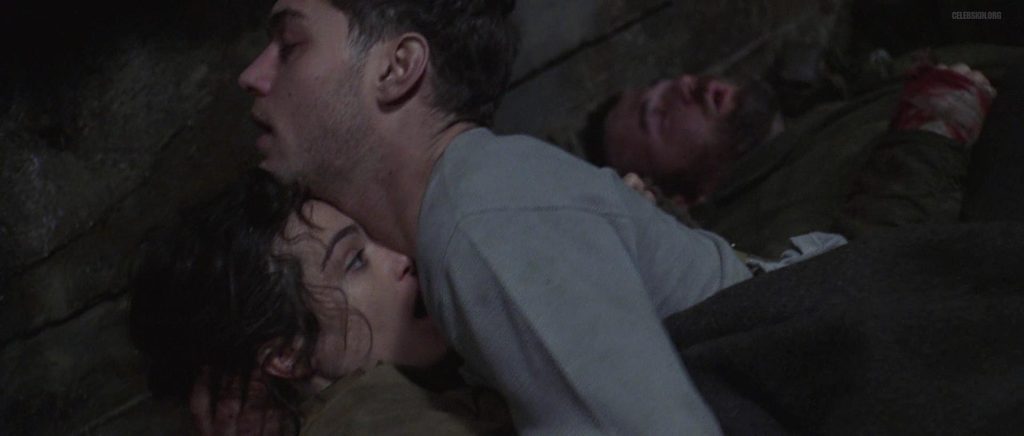
Movie Summary
The story begins in 1942, during the German advance into the Soviet Union. The Battle of Stalingrad has become one of the most brutal military confrontations of World War II. German forces are attempting to capture the strategically important city, while Soviet troops struggle desperately to hold their positions.
Among the soldiers sent into the battle is Vasily Zaitsev, a young Russian soldier from the Ural Mountains. During the chaotic fighting, he finds himself trapped among inexperienced troops with little chance of survival. Soviet soldiers are poorly equipped, and the battlefield is filled with overwhelming German firepower.
Vasily eventually discovers that he has an extraordinary ability with a rifle. Using patience, observation, and remarkable accuracy, he begins eliminating German soldiers from concealed positions.
His talent attracts the attention of Danilov, a political officer responsible for Soviet propaganda. Recognizing the value of a heroic figure who can inspire the exhausted defenders of Stalingrad, Danilov helps turn Vasily into a national symbol.
Stories of Vasily’s achievements spread throughout the Soviet ranks. His successes encourage other soldiers and help strengthen morale at a time when defeat seems increasingly possible.
Vasily also meets Tania Chernova, a young woman serving with the Soviet forces. Their relationship gradually develops despite the constant danger surrounding them. However, the growing emotional connection creates tension when Danilov also becomes interested in her.
The situation changes when German commanders realize that Vasily’s reputation is becoming a serious threat. His successful attacks are damaging German morale, and his growing influence makes him an important target.
The German military responds by sending Major Erwin König, an experienced and highly skilled sniper, to Stalingrad. König’s mission is to locate and kill Vasily, ending the Soviet sniper’s growing legend.
What follows is a dangerous game of patience between two men who understand that a single mistake could mean death.
Both snipers study the battlefield, searching for signs of movement and attempting to predict the other’s position. The ruined buildings, abandoned factories, and piles of rubble become a vast hunting ground where every shadow may conceal an enemy.
As the rivalry intensifies, the conflict becomes more than a military assignment. Vasily must prove that he is capable of defeating an opponent who possesses similar skills and extensive combat experience.
Meanwhile, the relationship between Vasily, Tania, and Danilov becomes increasingly complicated. The personal tensions unfold against a city where survival is never guaranteed and political loyalty can be as dangerous as enemy fire.
The final confrontation brings the two snipers into a deadly battle of intelligence, discipline, and patience. Each must understand the other’s methods and anticipate the next move.
Ultimately, the outcome of their duel becomes closely connected to the wider struggle for Stalingrad and the survival of those fighting to defend the city.
Star Cast
The film features an international ensemble led by Jude Law and Ed Harris, with supporting performances from several acclaimed actors.
- Jude Law as Vasily Zaitsev – A talented Soviet sniper whose remarkable accuracy turns him into a celebrated symbol of resistance during the Battle of Stalingrad.
- Ed Harris as Major Erwin König – An experienced German sniper sent to Stalingrad to eliminate Vasily and undermine Soviet morale.
- Joseph Fiennes as Danilov – A Soviet political officer who recognizes Vasily’s potential as a propaganda hero and helps build his reputation.
- Rachel Weisz as Tania Chernova – A Soviet soldier who develops a romantic relationship with Vasily, becoming involved in the emotional conflict between him and Danilov.
- Bob Hoskins as Nikita Khrushchev – A senior Soviet political figure responsible for maintaining morale and discipline among the defenders of Stalingrad.
- Ron Perlman as Koulikov – A Soviet sniper who becomes an important figure in Vasily’s development as a marksman.
- Gabriel Thomson as Sacha Filipov – A young Russian boy who becomes involved in the dangerous struggle between the Soviet and German forces.
- Eva Mattes as Mother Filipov – Sacha’s mother.
- Matthias Habich as General Friedrich Paulus – The German commander leading the Sixth Army during the Battle of Stalingrad.
- Sophie Rois as Ludmilla – A supporting character connected to the Soviet side of the story.
- Mikhail Matveev as Vasily’s Grandfather – Appears in the film’s earlier scenes, helping establish Vasily’s background.
What Makes Enemy at the Gates Worth Watching?
The Intense Sniper Duel
The central attraction of Enemy at the Gates is the psychological battle between Vasily Zaitsev and Major König.
Unlike conventional war films that focus primarily on large military operations, this story gives considerable attention to two individuals attempting to outthink one another. Their confrontations depend on patience, observation, deception, and the ability to remain calm under extreme pressure.
A sniper cannot afford to reveal his position or make an unnecessary movement. Every abandoned building, broken window, and pile of rubble could conceal an enemy.
This creates an atmosphere of suspense in which even quiet scenes can feel more dangerous than an open battlefield.
A Powerful Portrayal of the Battle of Stalingrad
The film recreates Stalingrad as a devastated city where ordinary life has almost completely disappeared.
Ruined buildings, burning streets, destroyed factories, and constant artillery attacks create a convincing sense of destruction. The large-scale battle sequences show the overwhelming conditions faced by soldiers on both sides.
The opening scenes are particularly memorable for their depiction of Soviet troops crossing the Volga River under German attack. The confusion, fear, and enormous human cost of the battle establish the brutal environment in which Vasily’s story unfolds.
The production design and cinematography make the city feel like a character in its own right: an enormous battlefield where survival depends on finding shelter and recognizing danger before it is too late.
Jude Law’s Transformation into Vasily Zaitsev
Jude Law delivers a compelling performance as a soldier who gradually becomes a national hero.
At the beginning, Vasily is simply another young man trying to survive an overwhelming battle. His exceptional shooting ability changes his position within the Soviet military, but his growing reputation also places an enormous burden on him.
Law portrays the character’s transformation from an inexperienced soldier into a confident and highly disciplined sniper. He also captures Vasily’s vulnerability when the conflict becomes personal.
His performance gives the film an emotional center beyond the action and military spectacle.
Ed Harris as a Formidable Enemy
Ed Harris brings considerable intensity to the role of Major König.
Rather than portraying the German sniper as a simple villain, the film presents him as a professional soldier with patience, intelligence, and a deep understanding of his opponent’s methods.
His presence changes the nature of the conflict. Vasily is no longer hunting ordinary soldiers; he is facing someone who can anticipate his decisions and recognize the smallest mistake.
The contrast between Harris’s controlled, experienced sniper and Law’s increasingly confident young marksman gives their rivalry much of its dramatic power.
Propaganda, Reputation, and the Meaning of Heroism
Another important theme is the relationship between warfare and propaganda.
Danilov understands that military victories are not always enough to maintain the morale of exhausted soldiers. People also need stories of courage and individuals they can believe in.
By turning Vasily into a celebrated national figure, Danilov helps create a symbol that can inspire the Soviet defenders.
However, this process also raises questions about the difference between a real person and the public image created around him. Vasily becomes more than a soldier: he becomes a representation of national resistance.
The film explores how propaganda can influence the course of a conflict while placing enormous pressure on the people who become its symbols.
A Blend of War, Romance, and Personal Conflict
Although the sniper rivalry dominates the film, the relationship between Vasily, Tania, and Danilov adds another layer to the story.
Their emotional conflict unfolds in an environment where death is always close. Love, loyalty, jealousy, and friendship become difficult to separate from the larger struggle for survival.
The romantic storyline also gives the characters motivations beyond military duty, although some viewers may find it less convincing than the film’s central sniper duel.
This combination of personal drama and historical warfare makes Enemy at the Gates more than a conventional battlefield action movie.
A Memorable Musical Score
The film’s music was composed by James Horner, whose score helps establish its emotional and dramatic atmosphere.
The soundtrack moves between quieter, reflective passages and powerful orchestral moments accompanying the battle sequences.
Rather than simply emphasizing action, the music also reinforces the loneliness and psychological pressure experienced by the characters.
Together with the cinematography and production design, it contributes significantly to the film’s epic scale.
Historical Background and Dramatic Liberties
Enemy at the Gates draws inspiration from the real Battle of Stalingrad and the wartime reputation of Soviet sniper Vasily Zaitsev. The film was also inspired by William Craig’s historical book Enemy at the Gates: The Battle for Stalingrad and Derek Lambert’s novel Vendetta.
Zaitsev was a real Soviet sniper who became famous for his service during the battle. However, the film takes considerable dramatic liberties with historical events, particularly its portrayal of the personal sniper duel between Zaitsev and Major König.
The historical evidence for a German sniper named König being sent specifically to hunt Zaitsev remains disputed. The characters and their dramatic confrontation should therefore be understood as part of a fictionalized interpretation of the battle rather than a fully documented historical account.
For viewers interested in the actual history of Stalingrad, the film works best as a war drama inspired by real events, not as a documentary.
Movie Details
| Category | Information |
|---|---|
| Title | Enemy at the Gates |
| Release Year | 2001 |
| Country | United States, United Kingdom, France, Germany, Ireland |
| Language | English, German, Russian |
| Genre | War, Drama, Action, History, Romance |
| Director | Jean-Jacques Annaud |
| Writers | Jean-Jacques Annaud, Alain Godard |
| Based On | Historical accounts of the Battle of Stalingrad; works by William Craig and Derek Lambert |
| Main Cast | Jude Law, Ed Harris, Joseph Fiennes, Rachel Weisz, Bob Hoskins |
| Supporting Cast | Ron Perlman, Gabriel Thomson, Eva Mattes, Matthias Habich |
| Cinematography | Robert Fraisse |
| Music | James Horner |
| Editing | Noëlle Boisson, Humphrey Dixon |
| Production Companies | Mandalay Pictures, Repérage Films, KC Medien |
| Distributor | Paramount Pictures |
| Theatrical Release (US) | March 16, 2001 |
| Runtime | 131 minutes |
| Rating | R |
Where to Watch Enemy at the Gates (2001)
Enemy at the Gates has been distributed through major home-entertainment and digital platforms. Depending on the country, viewers may find it through digital rental, purchase services, or selected streaming catalogs.